Why Cloud Backup ?
With no geographical restrictions, through cloud backup, users in earthquake-prone areas can easily back up their data to data centers in other regions without the need to build their own data centers..
Cloud backup offers a pay-as-you-go billing method, allowing users to achieve disaster recovery quickly and avoid significant investments in infrastructure.
Supports backing up files, databases, and virtual machines that are deployed either in local IT environments or on cloud-based virtual machines. Our functionality is independent of the cloud platform.
Shared platform, private data—this is a key feature of our cloud backup solution. Your private data will be stored in your own storage, and other customers will neither see nor delete your data.
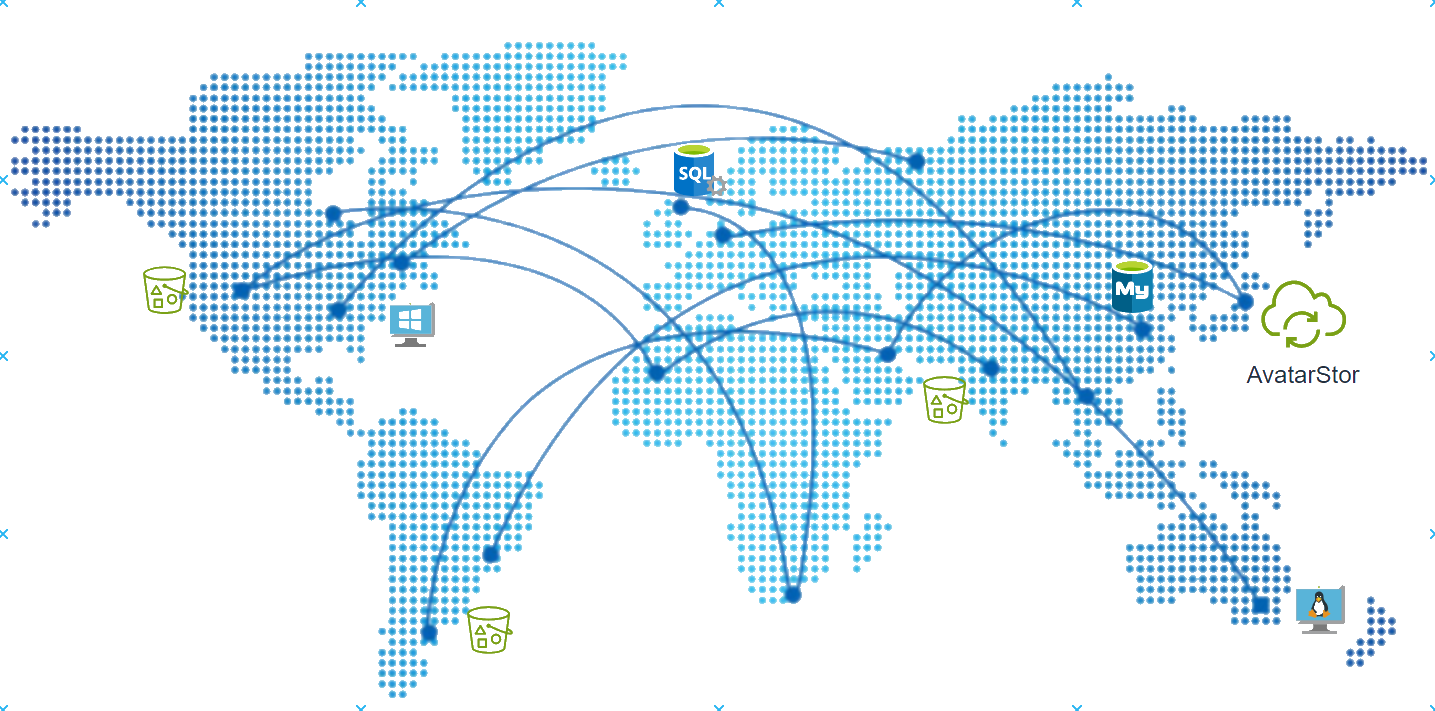
We provide cross-region and cross-network backup solutions, allowing you to back up your data regardless of whether it is on the cloud or within a local area network. Our service enables you to store your data wherever you choose, helping to prevent data loss due to cloud platform failures, accidental deletions, ransomware encryption, and other such incidents.
Billing
The Backup Fee is the amount we charge, based on the number of your clients. Our pricing plan is as follows:
| Clients | <5 | >5 |
| Daily fee | US $2.00 | US $2.00+0.40*(clients-5) |
| Billing | Every Sunday. Payment is made after use. | |
Please understand that we do not provide backup devices or backup storage. You will need to purchase object storage yourself, such as AWS or Microsoft Cloud Storage. The cost for this will be charged by the cloud storage provider. Of course, you can also use your own local storage (this feature will be available in a future version), which means you won't have to pay additional backup storage fees.
If you back up your data to cloud storage, you must also consider the network traffic costs associated with cloud storage. Most cloud storage providers charge not only for storage capacity but also for network traffic. Please note that backup writes are considered "incoming" traffic to cloud storage, while restores are considered "outgoing" traffic. The costs for these two types of traffic are often different.